For years, haptic feedback lived almost exclusively in your pocket. Smartphones used it to simulate button presses and notification taps, and that was largely the end of the story. But something has quietly shifted. Haptic technology is now spreading outward — into gaming controllers, laptop trackpads, styluses, wearables, and even peripheral accessories — and the direction of travel suggests it has much further to go.
The driving force behind this expansion is a generational upgrade in actuator technology. Traditional vibration motors — the eccentric rotating mass motors that buzzed in older phones — are being replaced by linear resonant actuators (LRAs) and, increasingly, by piezoelectric systems. These newer mechanisms respond faster, consume less power, and can be tuned to produce a far wider range of tactile sensations. The difference between a crude buzz and a precisely shaped click is not a small one. It changes how a surface feels to touch, and by extension, how much you trust the feedback it gives you.
Laptop trackpads have arguably shown the clearest example of this maturation. The shift away from mechanical hinges toward fully solid-state haptic pads — where the entire surface is stationary and the sensation of a click is generated entirely by an actuator — has become a meaningful differentiator in premium machines. Users who try a well-tuned haptic trackpad often report that it feels more consistent and more satisfying than a traditional click mechanism, even once they understand it involves no moving part.
Gaming controllers are another frontier. Trigger resistance haptics, introduced at the console level, have demonstrated that players respond strongly to tactile variation — resistance that changes depending on what a character is doing in-game adds a layer of immersion that visuals and audio alone cannot replicate. The concept is now filtering into third-party accessories and PC-focused controllers, expanding the audience beyond console ecosystems.
Styluses and drawing tablets are also beginning to incorporate more sophisticated haptic responses that simulate surface texture or provide subtle resistance feedback, giving digital artists a more grounded, physical drawing experience than a frictionless glass surface ever could.
What makes this trend durable rather than gimmicky is that it solves a real problem. Touch surfaces are inherently silent and textureless, and haptics give them communicative depth. As more of our interactions move to glass and smooth plastic — from trackpads to drawing surfaces to XR controllers — the demand for meaningful tactile feedback only increases.
The question for buyers evaluating gear in the ShazGear space is no longer whether a device has haptics, but how well those haptics have been implemented. Latency, fidelity, and contextual tuning matter far more than the presence of a vibration motor. The gap between a device that uses haptics thoughtfully and one that bolts them on as a checkbox feature is wide — and it shows up immediately the moment you touch it.
Gadgets & Accessories
The Rise of Haptic Feedback Beyond the Phone: Why Tactile Tech Is Spreading Across Your Entire Setup
November 4, 2026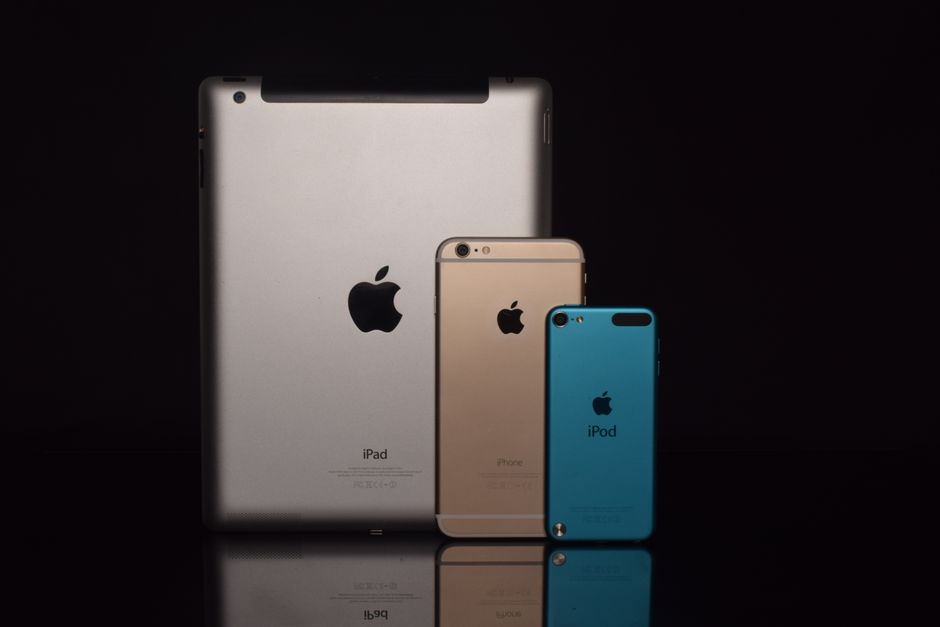
Related in Gadgets & Accessories
Nov 2, 2026
The Rise of Modular Cables: Why the Custom Sleeved Cable Market Is Becoming Mainstream
For most of the PC building era, cables were an afterthought. You plugged in what the power supply g…
Read More →
Oct 31, 2026
What Is a Hall Effect Sensor — And Why It's Quietly Changing the Way Input Devices Feel
If you've been shopping for a gaming controller or joystick recently, you may have noticed a phrase …
Read More →
Oct 29, 2026
What Is a KVM Switch — And Why It Might Be the Most Underrated Gadget on Your Desk
If you have ever found yourself juggling two keyboards and two mice just to move between a work lapt…
Read More →